Landfill vs Waste to Energy - Land Impact
Timarpur Okhla Waste Management Company Ltd. (TOWMCL) has processed more than 6 million metric tons (MMT) of waste since its inception, preventing major environmental degradation. If this waste had gone to a landfill, Delhi would have faced severe consequences. Setting up a landfill requires extensive evaluation to comply with regulations while minimizing economic, environmental, health, and social costs. Based on CPHEEO guidelines, assuming a 20 m landfill height and a bulk density of 0.85 t/cu.m., approximately 98 acres of land would have been required to dump 6 MMT of waste up to March 2021.
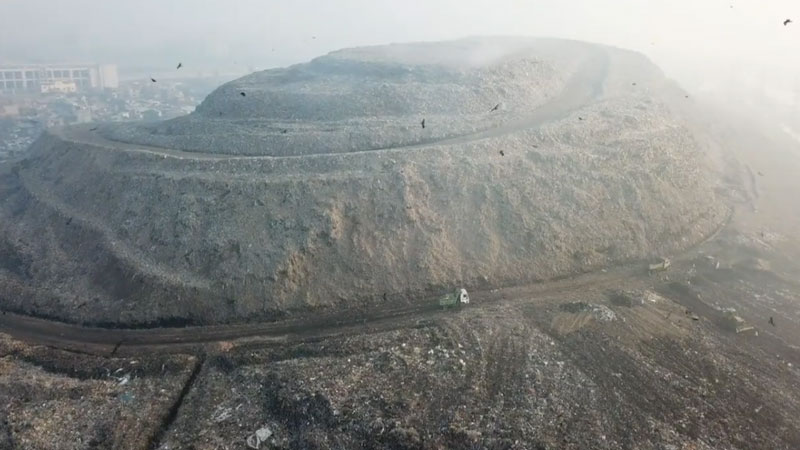
Landfills are a major source of anthropogenic greenhouse gas (GHG) emissions and global warming. Methane (CH4) from landfills accounts for 3% to 19% of global anthropogenic sources, and constitutes about 29% of total GHG emissions in India (nearly twice the worldwide average of 15%), contributing more to global warming than CO2. Using the First Order Decay Model (FOD), the estimated methane emissions (in Gg/yr) from 6 million tonnes of untreated waste would have been: 2012-2013: 66.15; 2013-2014: 66.73; 2014-2015: 72.92; 2015-2016: 74.71; 2016-2017: 67.84; 2017-2018: 75.52; 2018-2019: 68.30; 2019-2020: 62.63; and 2020-2021: 75.19.
Landfill vs Waste to Energy - Leachate Impact
The most common health danger from landfills is polluted groundwater contaminated by leachate, which also results in soil contamination and long-term environmental hazards. The Leachate Pollution Index value of 42.181 for the Okhla Landfill site indicates highly contaminated leachate. While leachate generation increases with municipal solid waste, TOWMCL's waste treatment has decreased leachate over time, reducing groundwater and soil contamination risks. Without processing 6 million metric tons of waste, approximately 1,19,117.65 Kilo Litres of leachate would have been generated.